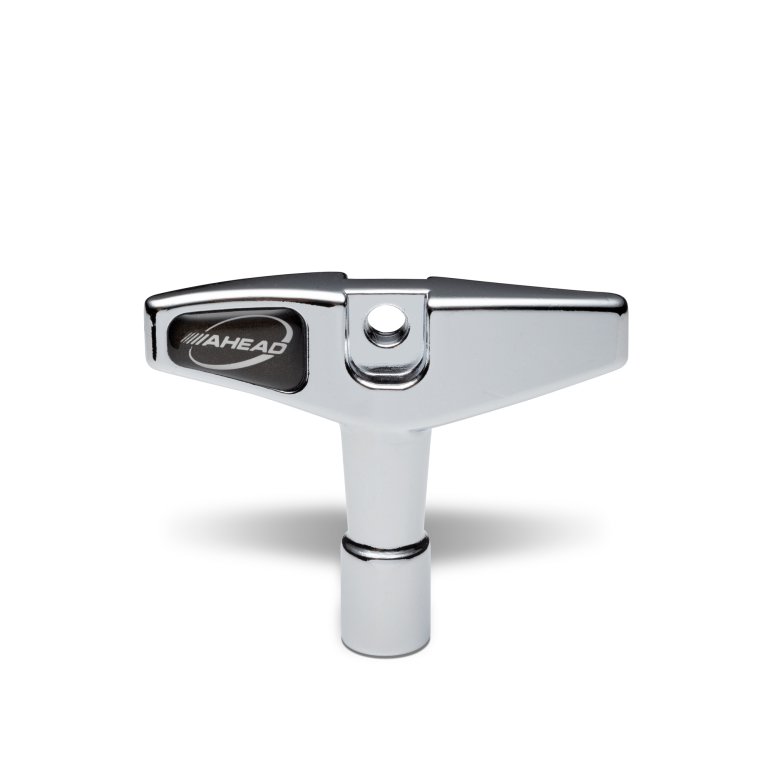
Here you’ll find a selection of drum keys for tuning, assembly, and maintenance of drum kits. The range spans from classic metal drum keys to more advanced solutions that make the job faster and more precise – whether you’re playing at home, rehearsing, or assembling drum kits professionally.
When you think of a drum key, you probably picture the classic T-shaped metal drum key – the one that often sits on a tuning lug on the snare drum.
But there are many more types of drum keys than just the classic model. For example:
The need for a drum key can vary a lot. There is a difference between whether you:
That is why drum keys come in many different designs – from very simple models to more advanced solutions that save time and make the work more comfortable. Browse the selection on this page and find the drum key that best suits the way you play.
Yes – the vast majority of drum keys fit standard tuning lugs, which are used on almost all drums today. There are a few special drum keys made for certain vintage or niche hardware solutions, but for around 99% of drum kits, a standard drum key will be fully compatible.
Even Sonor, who for many years held on to their “straight-slotted” tension rods, have today adopted the common global standard used on modern drum kits.
A standard drum key turns the tension rod directly, while a geared drum key makes tuning and head changes significantly faster, as it allows continuous rotation without removing the key from the lug – with up to four times the speed.
Technically, this is achieved by an internal gear mechanism inside the drum key. By holding counter-pressure with one hand, you can greatly increase rotation speed, which is especially useful when working with many tuning lugs.
Below you can see a geared drum key in action, demonstrating how the internal gearing works in practice:
Yes, some drum keys are designed for exactly that purpose. They can be mounted on the tuning lug and left there permanently, so you always have a drum key within easy reach.
If you use a classic metal drum key and leave it attached to, for example, a snare drum, it may cause some rattling while playing.
If you frequently change drumheads or assemble drum kits, a geared drum key or a drum key with an ergonomic grip is a clear advantage, as it saves both time and strain on your hands.
For disassembly, a drill bit for an electric screwdriver can be extremely effective. However, you should be more careful during head installation – here, a geared drum key or a regular drum key with a good grip is recommended.