Listen before you buy Fixed shipping rates Full return policy High trust rating Customer Service: Phone: +45 26 810 910

The Best Earplugs for Music and Concerts – Guide 2026
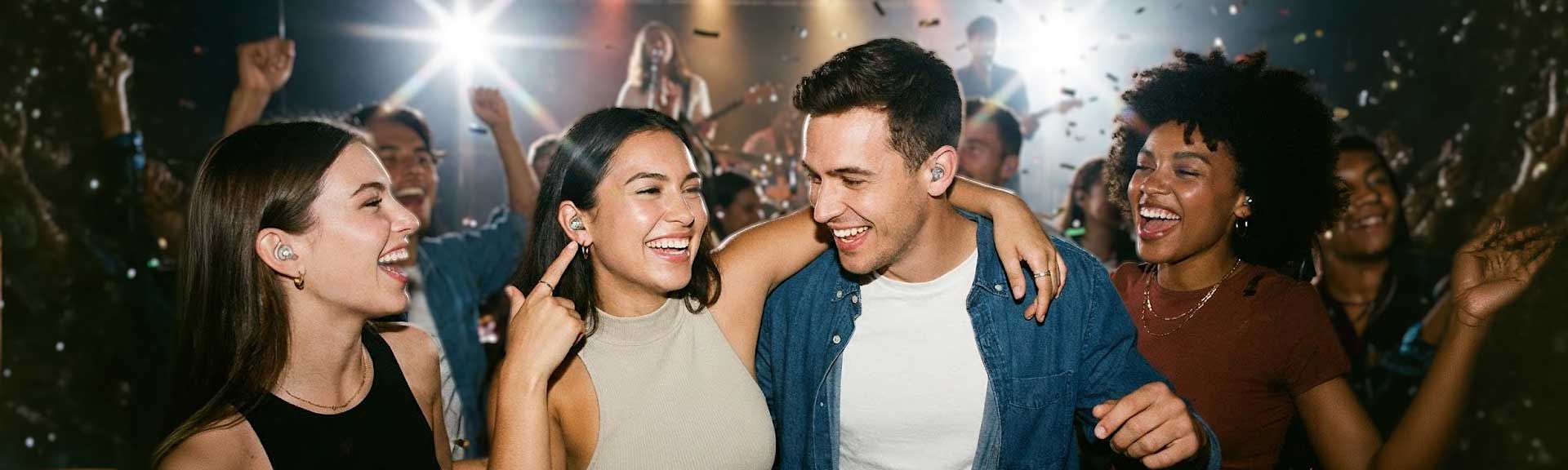
Young people at a concert wearing earplugs
Using earplugs for music is not about turning the experience down. It is about preserving it. Hearing damage rarely happens overnight. It develops gradually. And whether you are a musician or a concertgoer, your ears are your most important tool. But not all earplugs are the same.

Foam earplugs – better than nothing
Many people use cheap foam earplugs – and that is absolutely better than nothing, make no mistake. They reduce the worst sound pressure and can be a quick and inexpensive solution.
 
But they are not designed for music. They primarily reduce higher frequencies, which often makes the sound feel dull and unclear. You lose detail, space and balance – and some people end up playing or listening louder to compensate.
 
If the goal is simply to block noise, foam plugs can be fine.
If you want to preserve the music and use something you will actually keep wearing, earplugs with proper acoustic filters make much more sense.
 
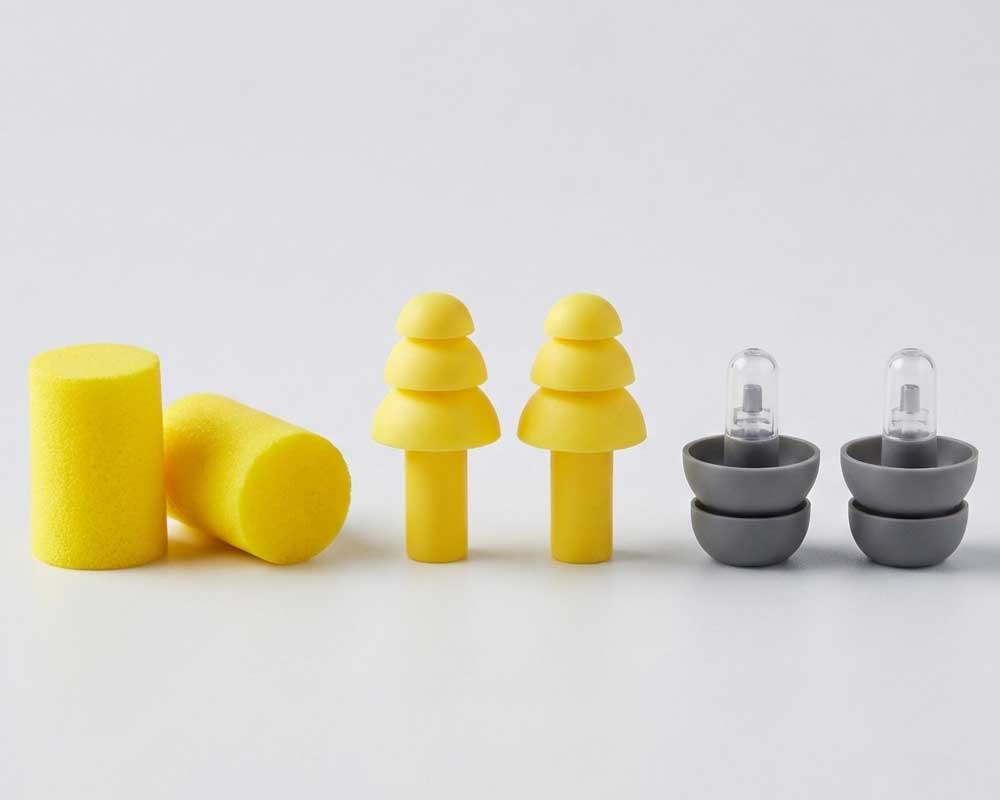
Difference between foam earplugs, triple-flange earplugs and earplugs with acoustic filters
From left: classic foam earplugs, triple-flange earplugs without filters, and earplugs with genuine acoustic filters.

What defines good earplugs for music?

Earplugs developed for music aim to reduce sound more evenly across the frequency spectrum. This is often referred to as linear or balanced attenuation.
 
In practice, this means:
  • Less distortion
  • More natural vocals
  • Better sense of dynamics
  • Reduced ear fatigue
They do not simply reduce “as much as possible”. They reduce sound correctly.

Earplugs for concerts and festivals

At concerts, many people choose so-called filter earplugs with built-in acoustic filters. These filters use specially designed membranes to reduce sound in a more even way. Typical attenuation is around 15–20 dB, which for most people is enough to protect hearing without ruining the experience.
 
Models such as Ahead Ear-Q HiFi or Ear Pad Universal are examples of earplugs designed to preserve natural sound rather than simply block it.
 
They are well suited for:
  • Concerts
  • Festivals
  • Band rehearsals
  • Small to mid-sized venues
Here, balance matters more than total isolation.
 

Drummer wearing earplugs during rehearsal to protect hearing

When sound levels are high for many hours

In rehearsal rooms or on stage – especially for drummers – stronger attenuation may be necessary. In these situations, models offering around 23 dB can be relevant.
 
An example is Ear Pad Strong.
 
The number alone is not the most important factor. What matters is how the attenuation feels – and whether you can still stay musically oriented.

Custom-molded earplugs – for fit and stability

If you want improved fit and a more consistent seal, custom-molded earplugs can be a strong alternative.
 
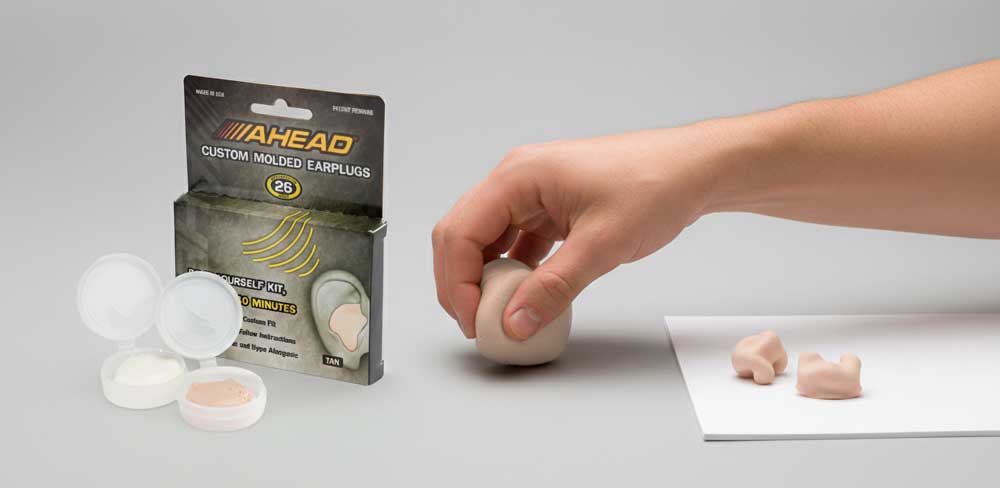
There are both clinic-made solutions and do-it-yourself versions. A model such as Ahead ACME allows you to mold earplugs at home and achieve a personalised fit without visiting a hearing clinic.
 
Custom solutions can be relevant for:
  • Drummers
  • Motorcycle riding
  • Hunting
  • Sleep
Here, fit and stability are often prioritised over interchangeable filters.
 
There are also professionally made custom earplugs from hearing clinics with interchangeable acoustic filters in different attenuation levels. For many professionals, this is the ideal solution – particularly for intensive music use or working with sound daily. However, the price is significantly higher than both standard and DIY options.
 
DIY custom molded earplugs for improved fit and noise reduction
DIY custom earplugs can be molded at home and provide a tighter, more stable fit than standard models.

Which earplugs are best?

There is no single model that is best for everyone.
 
The right choice depends on:
  • How loud the environment is
  • How long you are exposed
  • How important sound quality is
  • How much comfort matters

For concerts and live music, many people choose triple-flange earplugs with built-in acoustic filters. They are designed to attenuate more evenly, preserving the sense of space, vocals and detail in the music.

It is worth noting that not all triple-flange earplugs include genuine acoustic filters. Some are simply molded silicone without filter technology and function much like standard noise plugs – just in a different shape. They may reduce volume effectively, but they are not designed to maintain sound balance.

Additionally, some earplugs are marketed with multiple “interchangeable filters”, where the filter is essentially just a small plastic insert with different hole sizes depending on attenuation level. These simplified designs mainly regulate the amount of sound – not its quality. The result can be a less natural and less balanced listening experience.

Earplugs with proper acoustic filter systems are constructed differently and aim to preserve frequency balance. One example is EarSonics Ear Pad, which is specifically developed for music use.

The most important choice is to actually use them

The most important factor is not whether attenuation is 18 or 23 dB.
 
The most important thing is that you use them.
 
If earplugs ruin the experience, they stay in your pocket.
If they preserve the music, you will use them again next time.
 
And that is where the real difference lies.

👉 See our selection of earplugs for music here:


🔎 Frequently Asked Questions about earplugs for music and concerts

Which earplugs are best for concerts?

There is no single model that suits everyone. For concerts and live music, many choose earplugs with built-in acoustic filters because they reduce sound more evenly while preserving musical detail. Foam earplugs provide protection but often compromise clarity and balance.

How much attenuation should I choose for concerts?

Typical concerts range between 95 and 110 dB. For most people, attenuation between 15–23 dB is suitable. If you are performing – especially as a drummer – or standing close to the PA system, stronger attenuation may be necessary.

Are foam earplugs good enough for music?

Foam earplugs are better than no protection and effectively reduce sound pressure. However, they attenuate unevenly and can make music sound dull and less detailed. Many people prefer filtered earplugs to preserve sound quality.

What is the difference between earplugs with and without acoustic filters?

Earplugs without filters mainly block sound. Earplugs with acoustic filters are designed to reduce volume more evenly across frequencies, making music sound more natural and balanced.

Are custom-molded earplugs better?

Custom-molded earplugs often provide a more precise fit and stable seal. They can be advantageous for long sessions or very loud environments. Sound quality depends on the filter design and construction.

Your basket is empty

DANSK WEBSHOP - CLICK HER! 🇩🇰 | Read this …